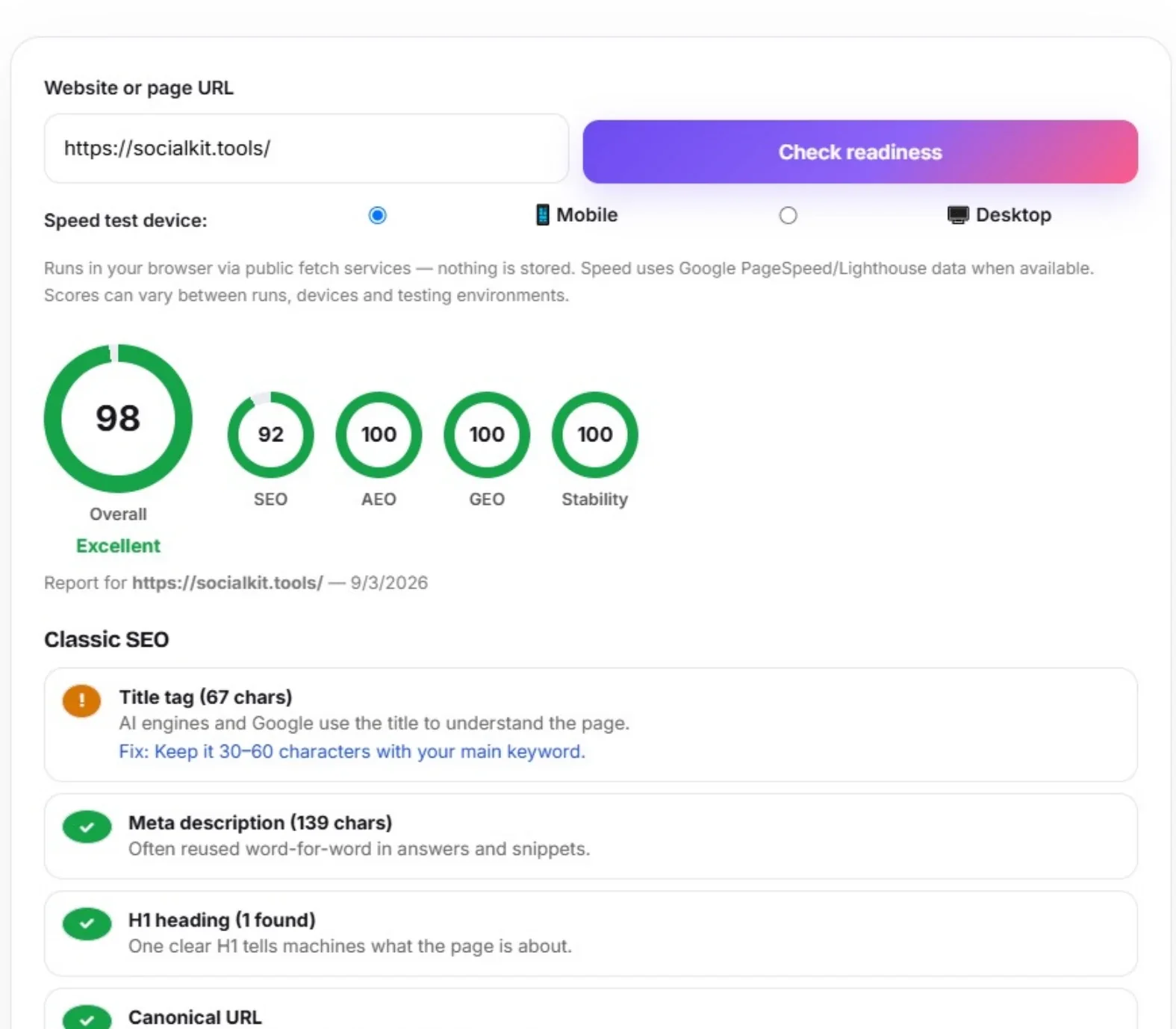
Step 1
Start with the URL, then read the score split.
The result begins with the overall readiness score and separate SEO, AEO, GEO and stability scores so you can see where attention is needed.
Is your website ready for ChatGPT, Perplexity, Claude and Google AI? Enter a URL to get one combined score across classic SEO, AEO, GEO and speed — with clear fixes for everything that fails.
Watch the checker move from a URL to the score breakdown, then use the visual guide below to see how SEO, AEO, GEO, stability and the final fix summary appear in the report.
The demo uses the real checker interface. The result view separates broad readiness from the specific checks that need attention.
These high-resolution captures show the parts of the result that matter most. Click any image to open the full-resolution version.
The result begins with the overall readiness score and separate SEO, AEO, GEO and stability scores so you can see where attention is needed.
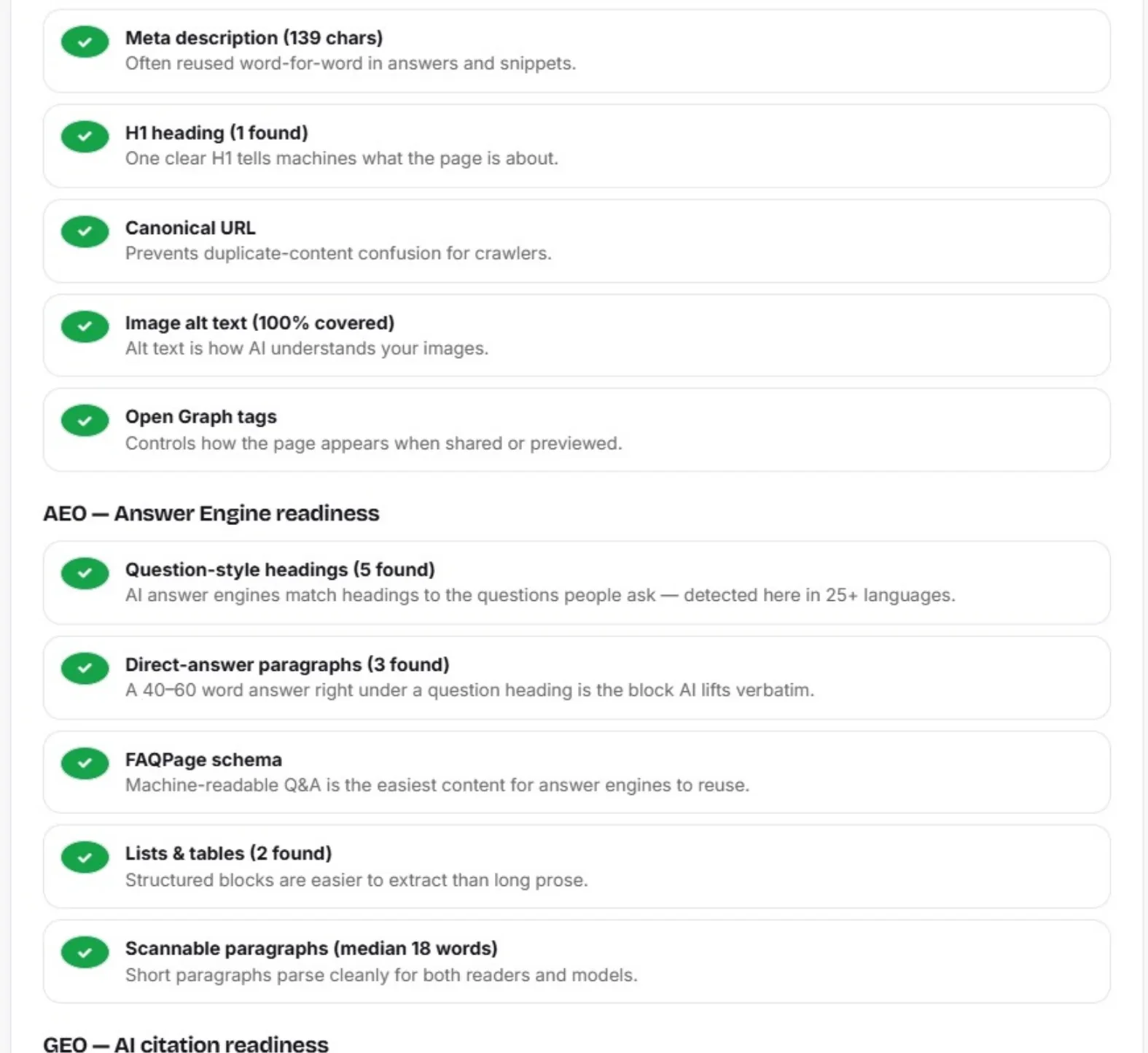
See whether key page signals and answer-extraction elements pass, fail or need improvement instead of relying on one vague score.
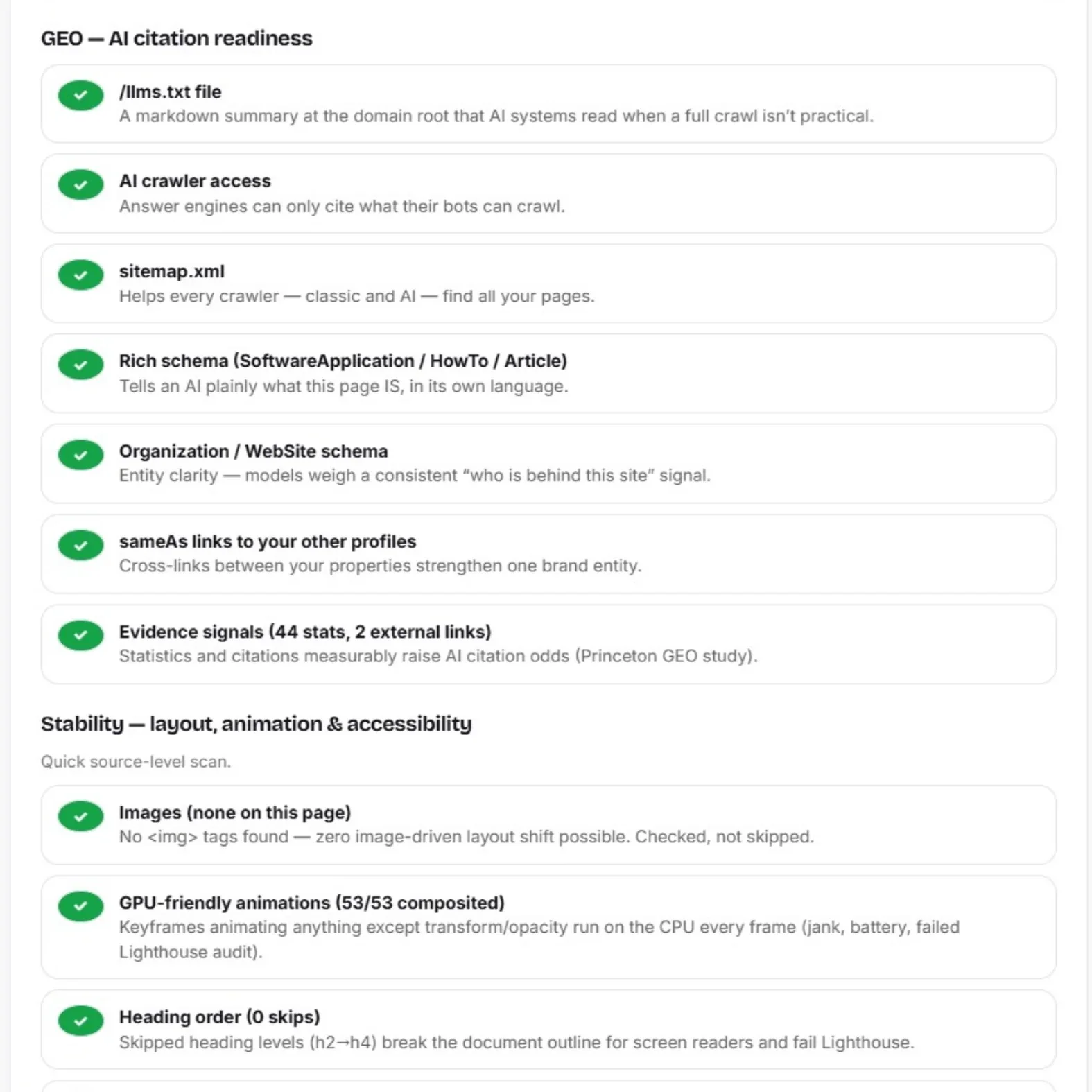
The report surfaces crawl access, llms.txt, sitemap, schema, evidence signals and stability checks in separate sections so the findings stay actionable.
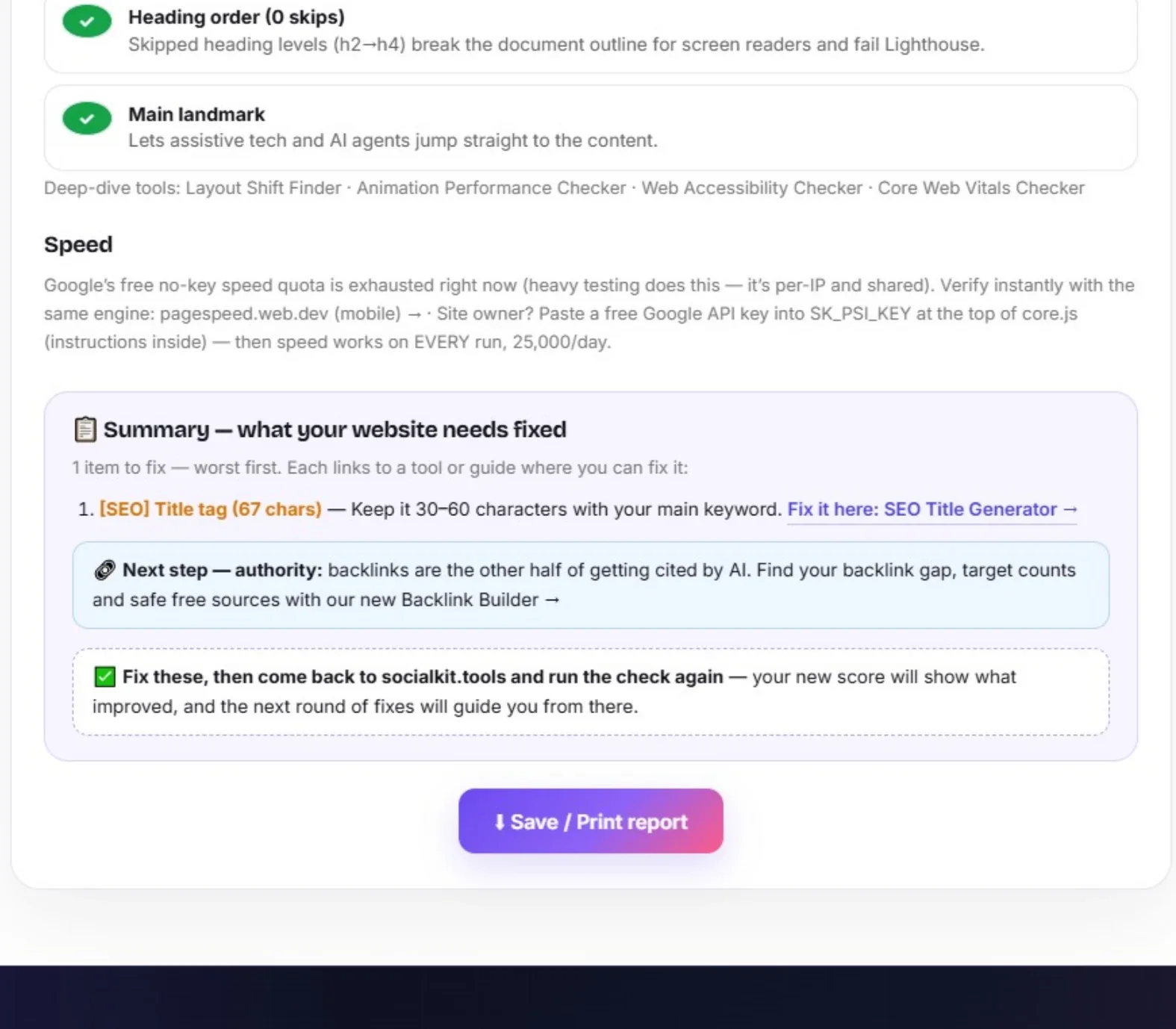
The final section brings the remaining fixes together and gives you a clean point to save the report, apply changes and run the checker again.
The tool fetches your page and your site's robots.txt, llms.txt and sitemap.xml directly in your browser, then runs Google PageSpeed Insights for Core Web Vitals. It scores four areas — SEO, AEO, GEO and speed — and every failed check comes with a one-line reason and a one-line fix, so you know exactly what to change first.
Each category looks at the signals that actually decide whether a machine can find, read and reuse your content. Classic SEO covers the crawl basics, AEO covers answer extraction, GEO covers AI citation, and Speed covers Core Web Vitals — together they show how visible you are in both old search and new AI answers.
How AI search works: engines like ChatGPT, Perplexity and Google AI read your page, extract direct answers and cite the clearest source — which is exactly how AI search is changing SEO in 2026. This AI search readiness checker tool (often searched as the “best AI search readiness checker free”, or simply an AEO GEO checker) scores all of it in one run: answer-ready headings, structured data, llms.txt, crawlability and speed — with a specific fix for every fail.